
CHARLES A. SHOUP
1926 – 2024
A lifetime of creating beauty
Painter, portraitist, architect, and gardener — Charles Shoup spent nearly eight decades in pursuit of a single idea: beauty is essential in life and outlasts everything else.
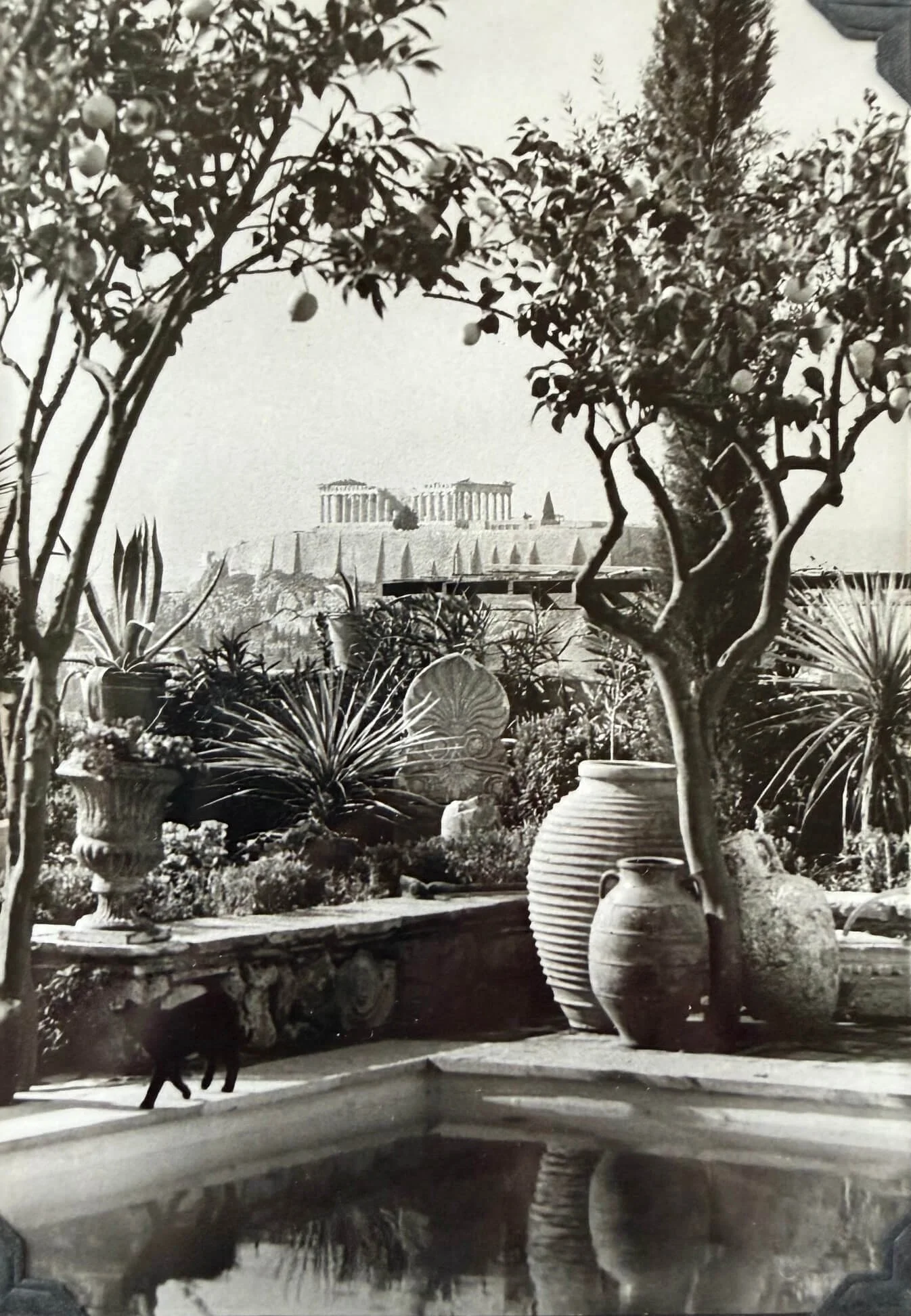
Charles Shoup was born in St. Joseph, Missouri, on November 23, 1926.
ST. JOSEPH & SCARSDALE · 1926–1943
His father, Mason C. Shoup, owned a successful fine China and glassware shop in St. Joseph that imported and sold items sent from Mason’s brother and business partner who lived in Germany.
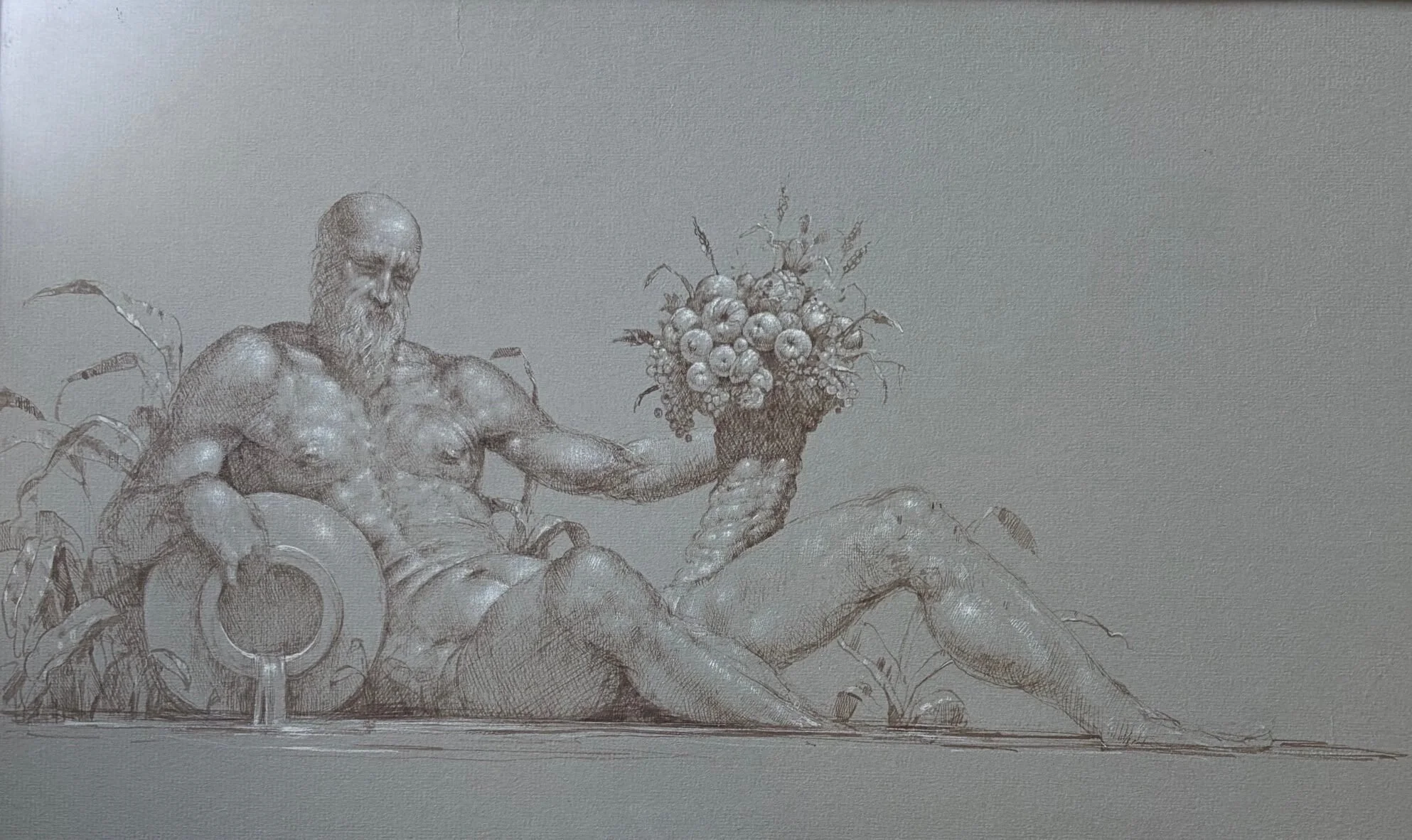
After the 1929 stock market crash, the store went bankrupt and the family moved to West Hartford, CT, when Charles was a toddler. Later, the family moved to Scarsdale, NY, a suburb of New York City, and Charles attended Scarsdale High School. His gift and aptitude as an artist was already apparent. Charles was the artistic director of the high school yearbook, and his clever illustrations peppered throughout the yearbook revealed not only Charles’ artistic talent but also his wry sense of humor.
YALE AND ON TO PARIS · 1943–1952
Charles graduated from high school at the age of 16 and went to Yale University to study art and art history. He was eager to leave his childhood home where his artistic temperament and leanings made him the object of derision. Charles said he would often overhear his grandfather – a retired U.S. Army General – tell his mother in a booming voice, “Dorothy, that boy isn’t going to amount to anything.
After an interruption in his studies to serve in the U.S. Navy during World War II, Charles graduated from Yale in 1947 with a degree in the History of Arts and Letters. Soon thereafter, he sailed to Europe on one of the “Liberty Ships” – ships built to carry munitions to Great Britain during the war and later commissioned to provide cheap passage to and from Europe for war veterans. This time, Charles was escaping the stifling culture of New England and the Ivy League in search of an environment where he could be more of himself as a young gay artist.
In Paris he continued to study drawing and painting and became an accomplished and sought-after portrait and still-life artist.


NEW YORK AND SAN FRANCISCO ART WORLDS EMBRACE A YOUNG PAINTER · c. 1947–1952
During this period, his friend, the wealthy American art patron Whitney Warren, Jr., encouraged him to show his work more widely. Charles had already shown his work at various galleries in Europe, but Warren arranged two significant U.S. art exhibitions of Charles’ work in America. The first was at the highly regarded Wildenstein Gallery in New York City and the second was at the Palace of the Legion of Honor in San Francisco.


Legendary acquaintances & a love of buildings
c. LATE 1940s–EARLY 1950s
Charles lived in Paris for several years, where he was part of the extraordinary post-war art scene known as the Café Society and developed many friends and some legendary acquaintances, including Noel Coward, Hubert de Givenchy, Truman Capote, William Somerset Maugham, Tennessee Williams, and James Merrill, just to name a few. It was likely during this time that he acquired a patrician way of speaking that gave his acerbic wit and humor and even greater flair and hid his American upbringing.
As a young man, Charles spent time in Rome, Venice, the south of France and Morocco, and during this period his love of architecture - and beautiful houses in particular - blossomed. He eventually grew weary of the social pressures associated with being a successful portrait artist and sought a quieter life outside the intense social circles he had occupied so successfully in Paris. On a trip to Greece, he found such a place. Athens had a bustling social scene that included expats from around the world but operated at a slower and more relaxed pace that appealed to him.

ATHENS · 1952–1959
A quieter life & a growing devotion to Neoclassicism
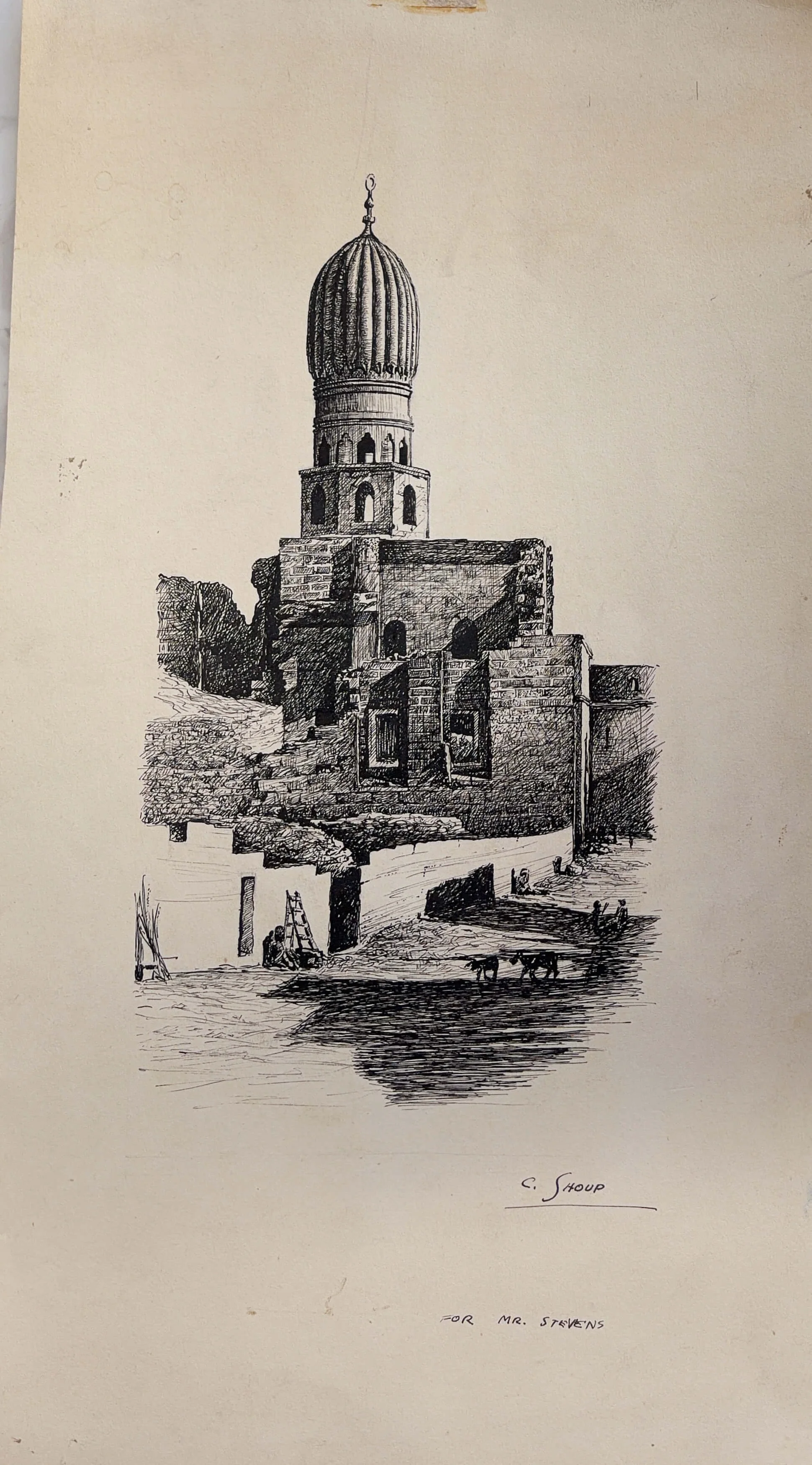
Charles had always loved to draw buildings. The architectural details in many of his favorite buildings spoke to him deeply, and the many historic villas he visited and studied became, by his own description, “like dear friends” to him. When he moved to Athens in 1952, his love of Neoclassical architecture grew. Eventually he began designing his own buildings and overseeing their construction and later gave up painting altogether. During this period, he also deepened his love of gardening and landscape design and began developing his signature style of combining rich Mediterranean garden landscapes with intricately detailed Neoclassical architecture.

KORONI, MESSINIA · 1959
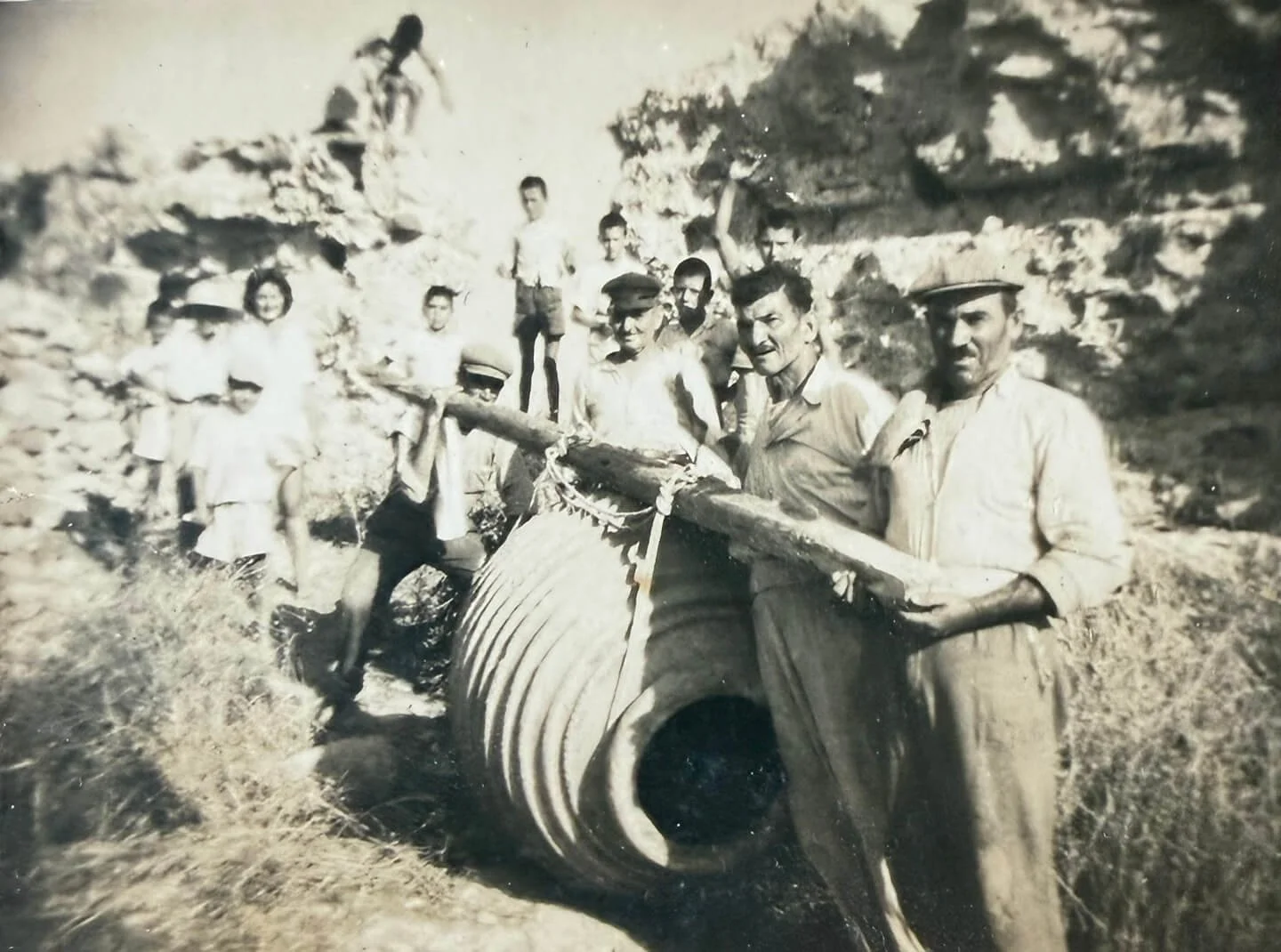
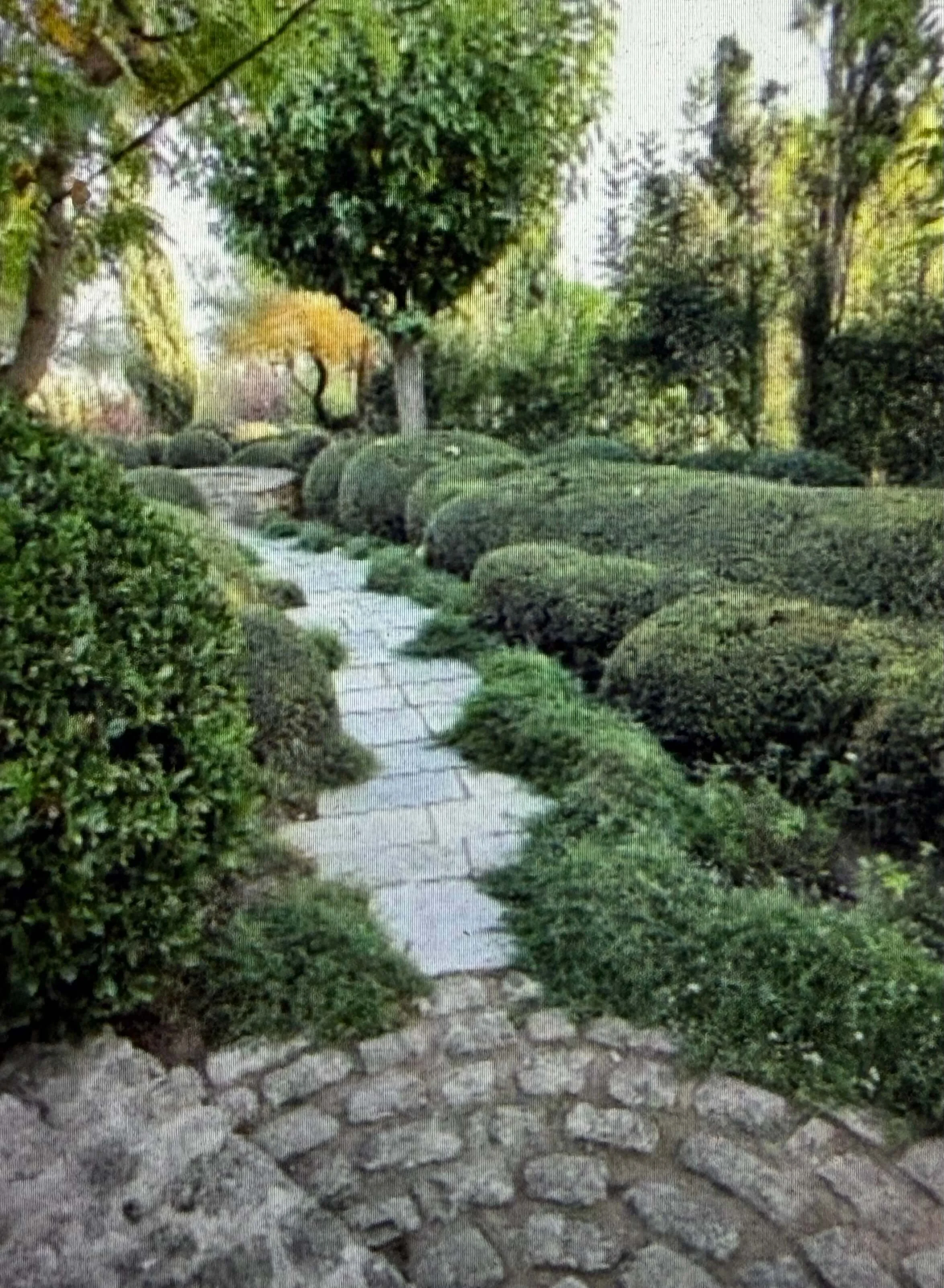
Charles lived in Athens for several years, and then in 1959 took a trip to southern Greece and toured the region of Messenia, including the Mani and the area around the ancient town of Koroni. He fell in love with the landscape there - hillsides with endless groves of olive trees punctuated by dark, towering cypress trees rolling down to the sea, with the majestic mountains of the Mani across the bay as a backdrop. He found a small plot of land to purchase inside the old Venetian castle walls above the village of Koroni and purchased it for $150 dollars - or its equivalent in Greek drachmas. In a letter to his parents back in America, Charles enthusiastically penned,
“I always knew I was meant to live in a castle.”
The dwelling he built was a tiny one-bedroom house, but with an impressive garden that expanded its living space and provided a stunning view looking north up the full length of the Bay of Messini toward Kalamata. He lived there happily with his dogs for 25 years.
CHARLES' FIRST MAJOR COMMISSION IN GREECE
ATHENS · 1964–1968
In 1964, Charles began his first significant building design in Greece. Harry Blackmer, a wealthy American ex-pat who lived in Athens, commissioned Charles to design an apartment for him in Athens at a site overlooking the Acropolis. Charles designed the building and oversaw its construction. The project included a lengthy permit process and took four years to complete. As payment for this work, Mr. Blackmer gave Charles the bottom two-floor apartment in the five-story building. The upper floors comprised Mr. Blackmer’s apartment, designed in a refined Neoclassical style. It was immediately recognized by the architectural community as an important work and appeared in a large spread in Architectural Digest in 1968.


A grand house, twenty years in the making
SOUTH OF KORONI · 1962–1990s
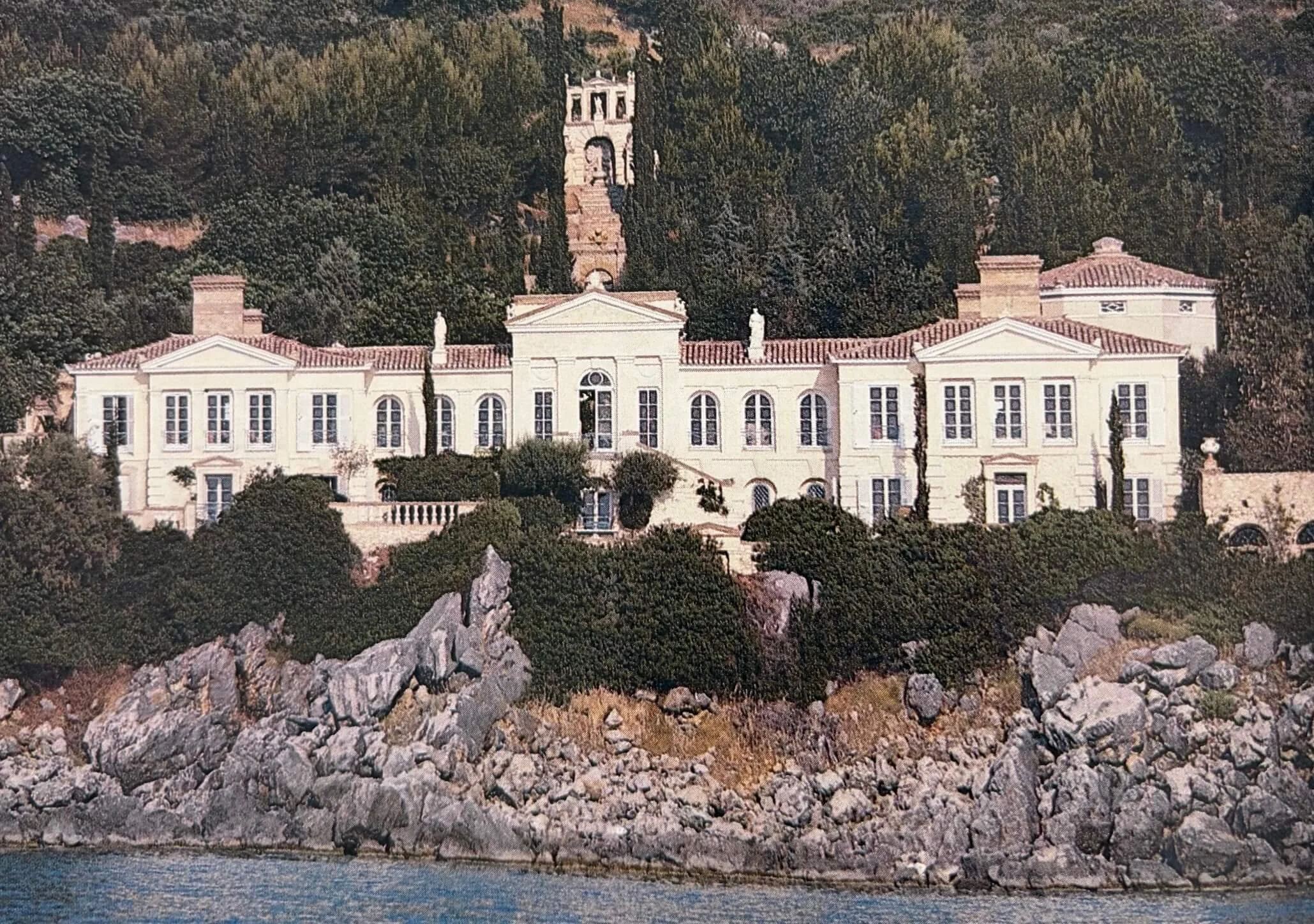
During his years living in the castle house in Koroni, he began to dream of creating a “grand” house and gardens to take advantage of the breathtaking beauty of this stretch of the Greek coast, and in 1962 he purchased a rugged piece of land on the sea a few kilometers south of Koroni. By 1971, he had sold the apartment in Athens and accumulated enough money to begin building what would become his most significant project. Eventually, this house and its stunning gardens would be featured in Architectural Digest (June 1990), Maison & Jardin (Dec 1998), and countless international magazines and books featuring important Neoclassical houses and Mediterranean gardens in southern Europe. This project did not come easily, however. Construction stretched over a 20-year period and stopped several times altogether when Charles ran out of money and had to let workers go. During these periods when construction was stalled, he went on gardening, and the gardens grew to be among the most notable anywhere in the Mediterranean.

Commissions for prominent Greek families
PALLINI & PSYCHIKO, ATHENS
During the years of building the house in Koroni, Charles supported himself by completing several architectural commissions for prominent Greek clients. The largest project of these was the house and gardens of Mrs. Eleni Martinou in Pallini, on the outskirts of Athens. This project lasted several years, earned significant acclaim and is featured in Athens Insider magazine and Haute Bohemians: Greece, a book on the most important houses of Greece. He also designed major renovations to a house in Psychiko for the Metaxas family and various projects for the _____ s, a prominent Greek shipping family.
2005
A quieter chapter
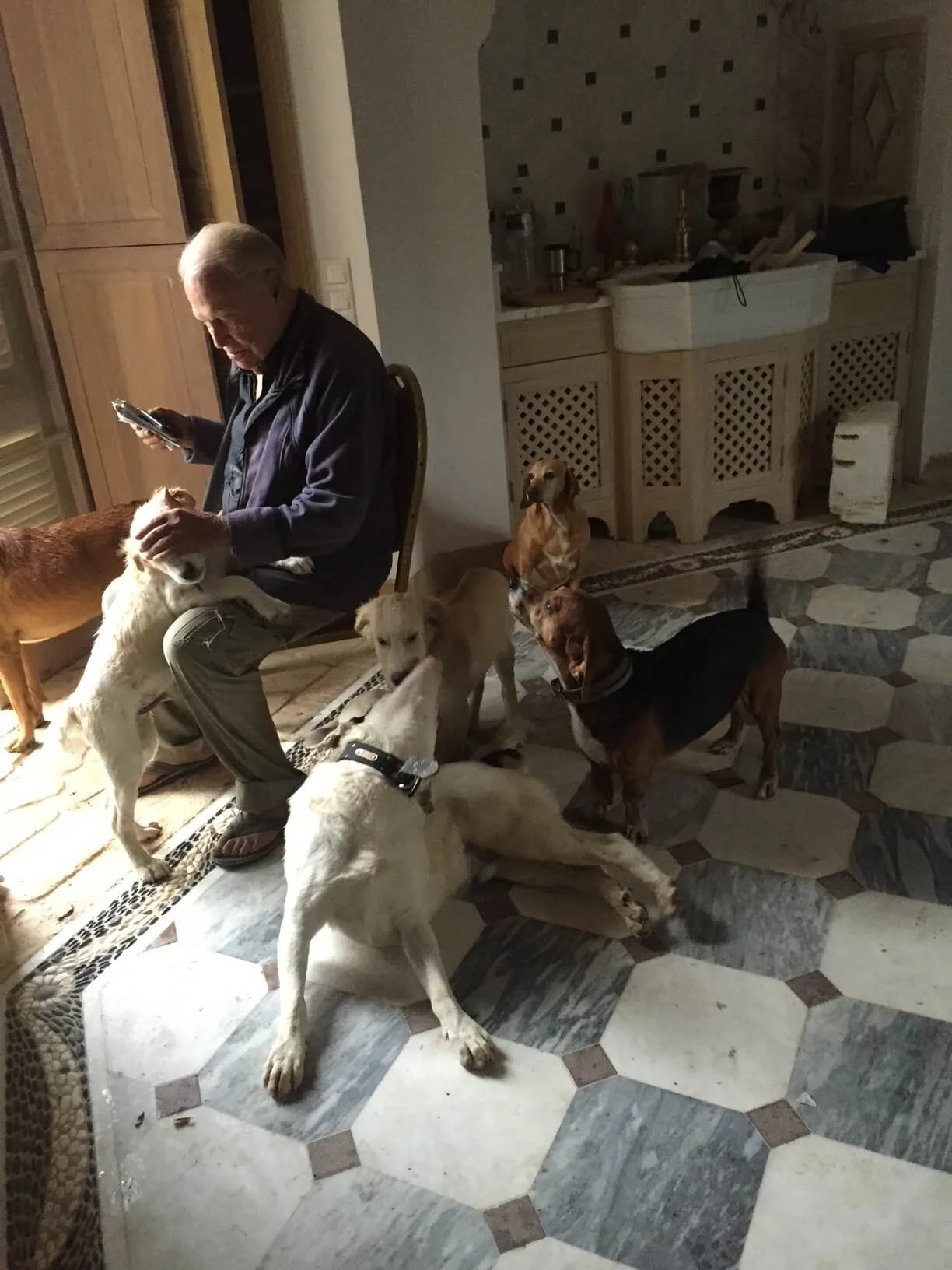
In 2005, at the age of 79, Charles was again out of money and no longer had the energy to maintain the enormous property himself. He sold the house and began looking for a new piece of land in the area where he could build something smaller — a place to spend his later years with his true loves: his dogs, his books, and his garden.

The house he had always dreamed of
BABALORIKI · 2006
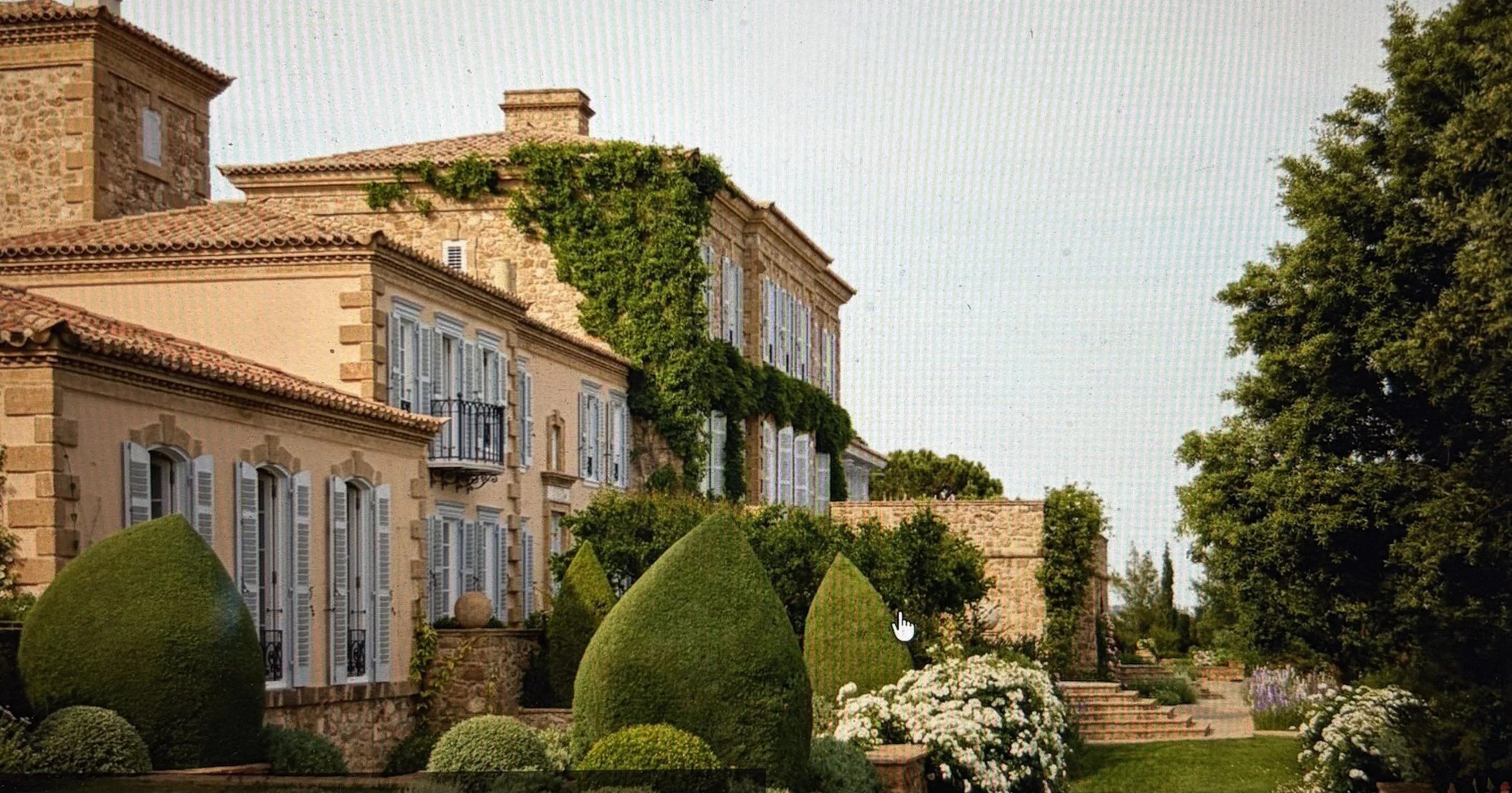
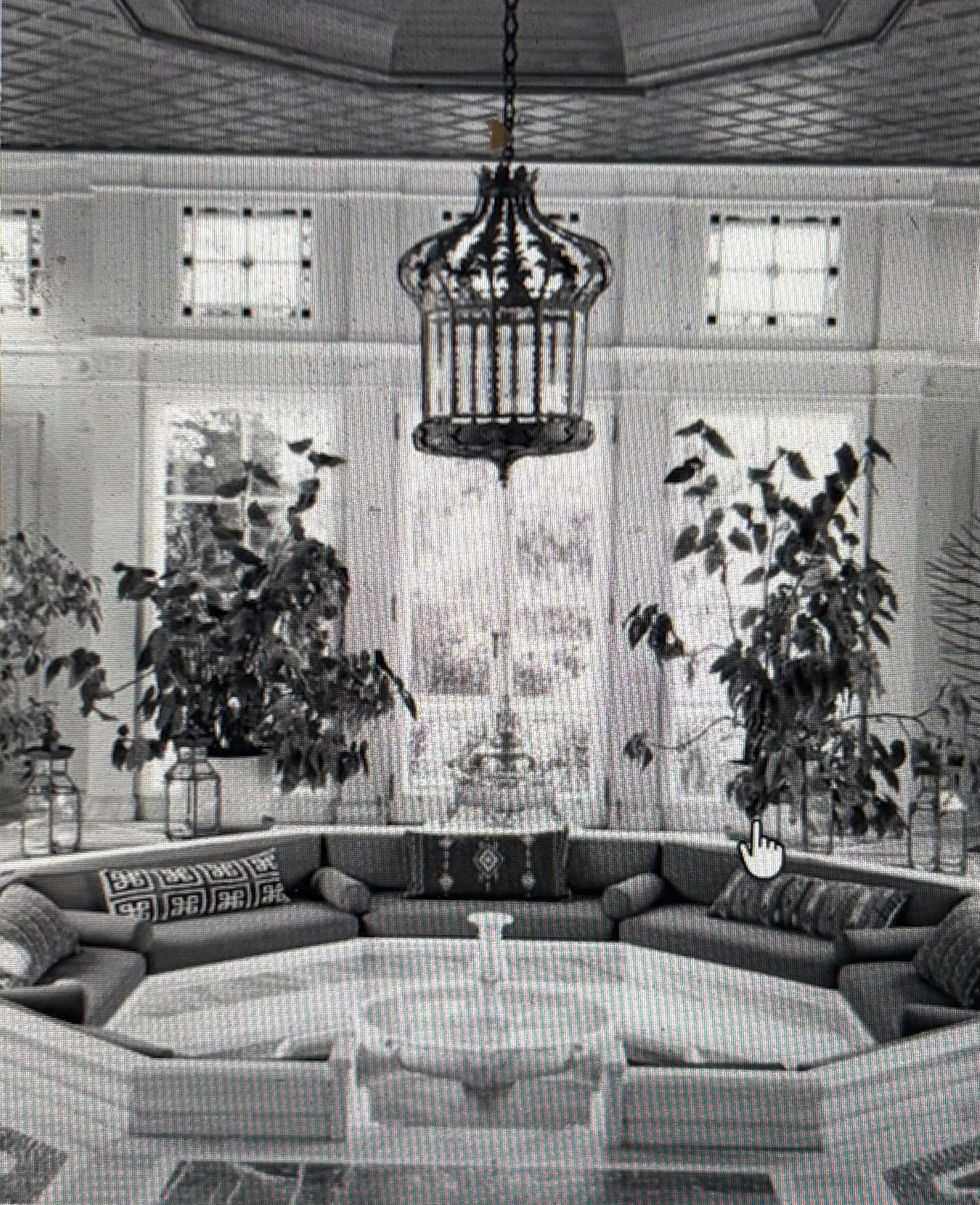
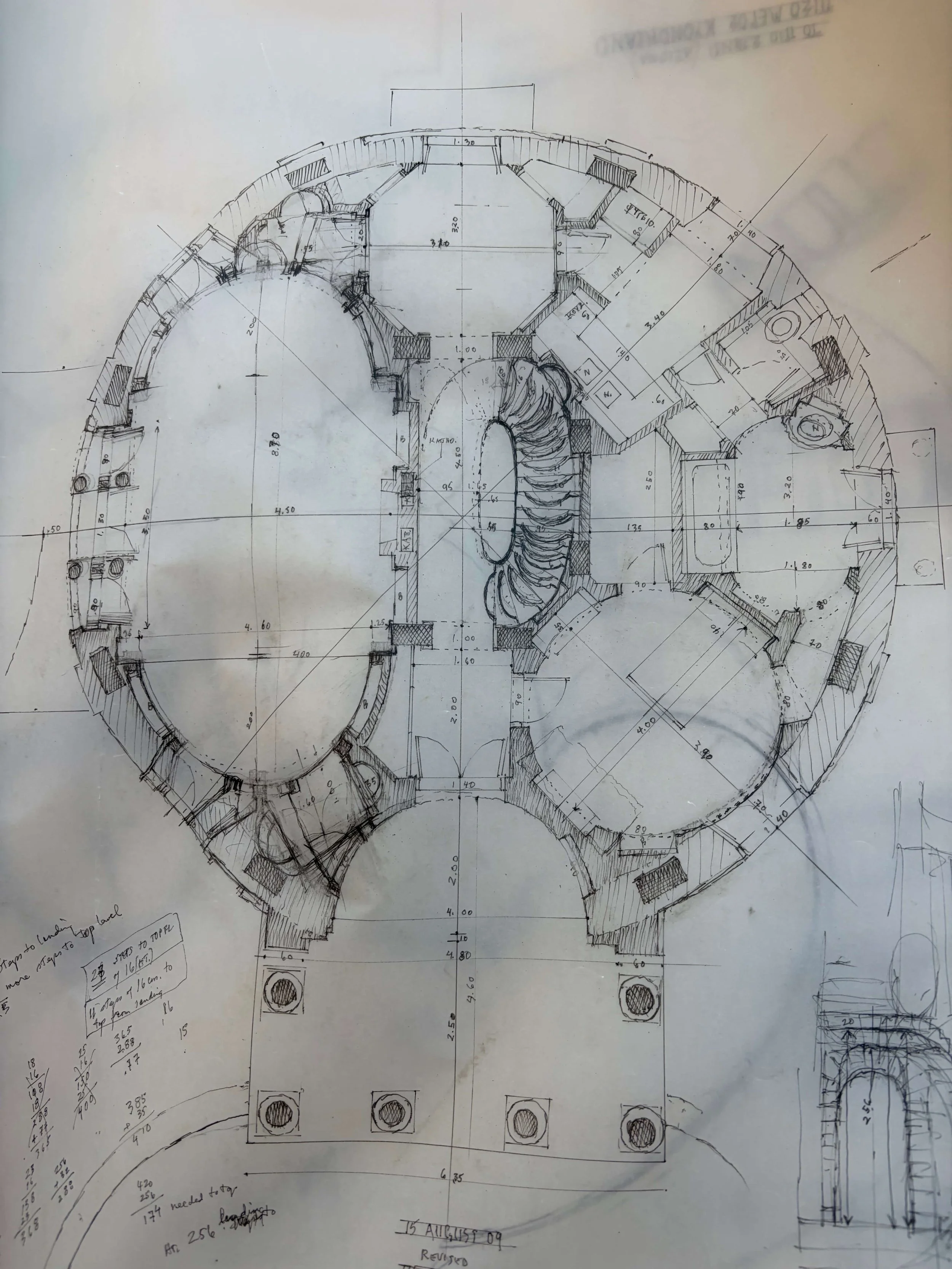
One of Charles’ favorite buildings in Europe was the Pantheon in Rome and among his favorite houses were the Villa Rotunda near Vicenza designed by the renowned 16th century architect Andrea Palladio and several buildings from the same period by another Renaissance artist and architect, Giulio Romano. For years, Charles dreamed of designing his own round house that combined aspects of these iconic neoclassical buildings. In 2006, he stumbled upon the perfect site – a small hill known locally as “Babaloriki” with 360-degree views of an unspoiled valley filled with olive groves and cypress trees and a spectacular view across the Bay of Messini to the mountains of the Mani. Inspired, Charles began designing his round house.

Brick by brick, stone by stone
c. 2010–2017
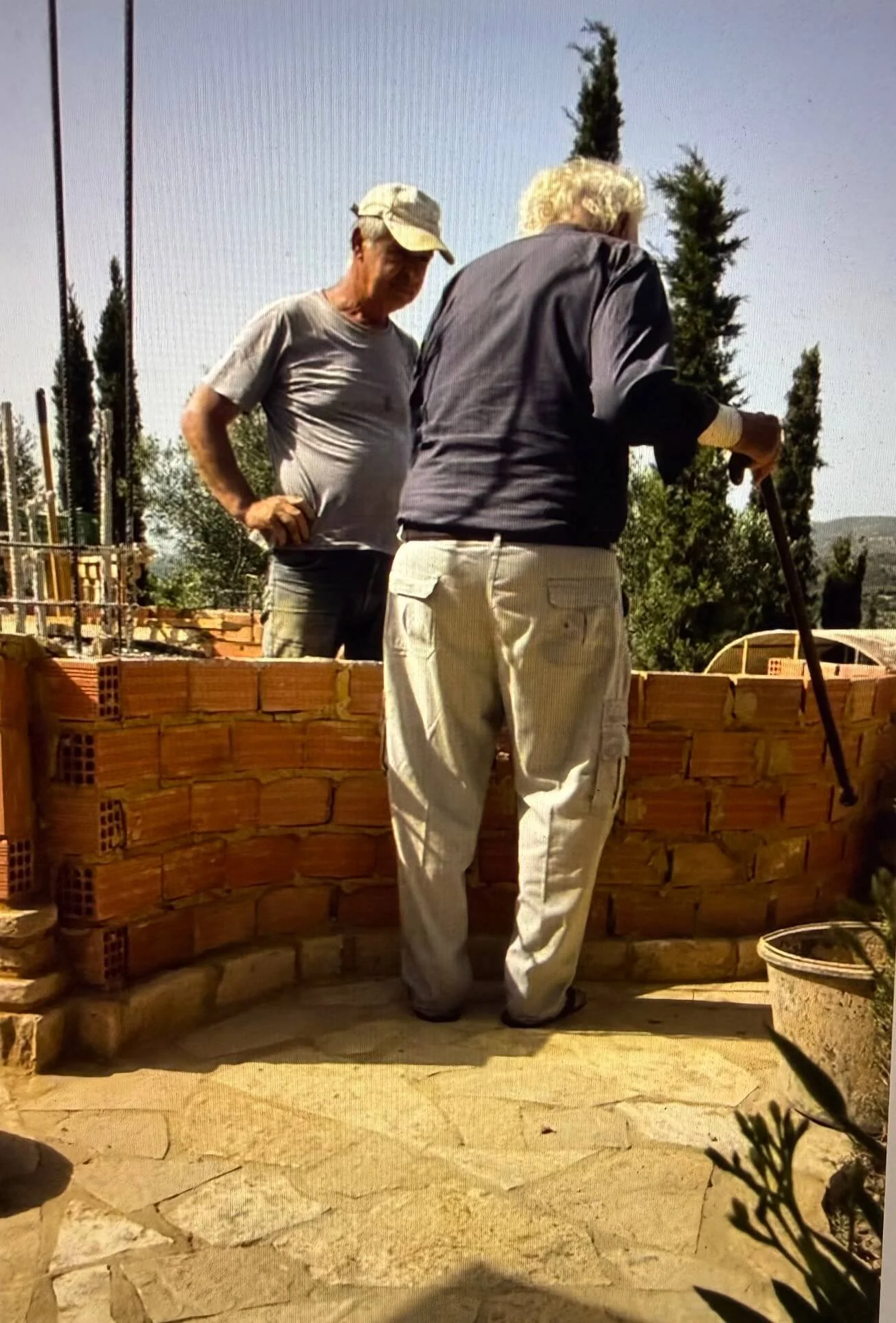
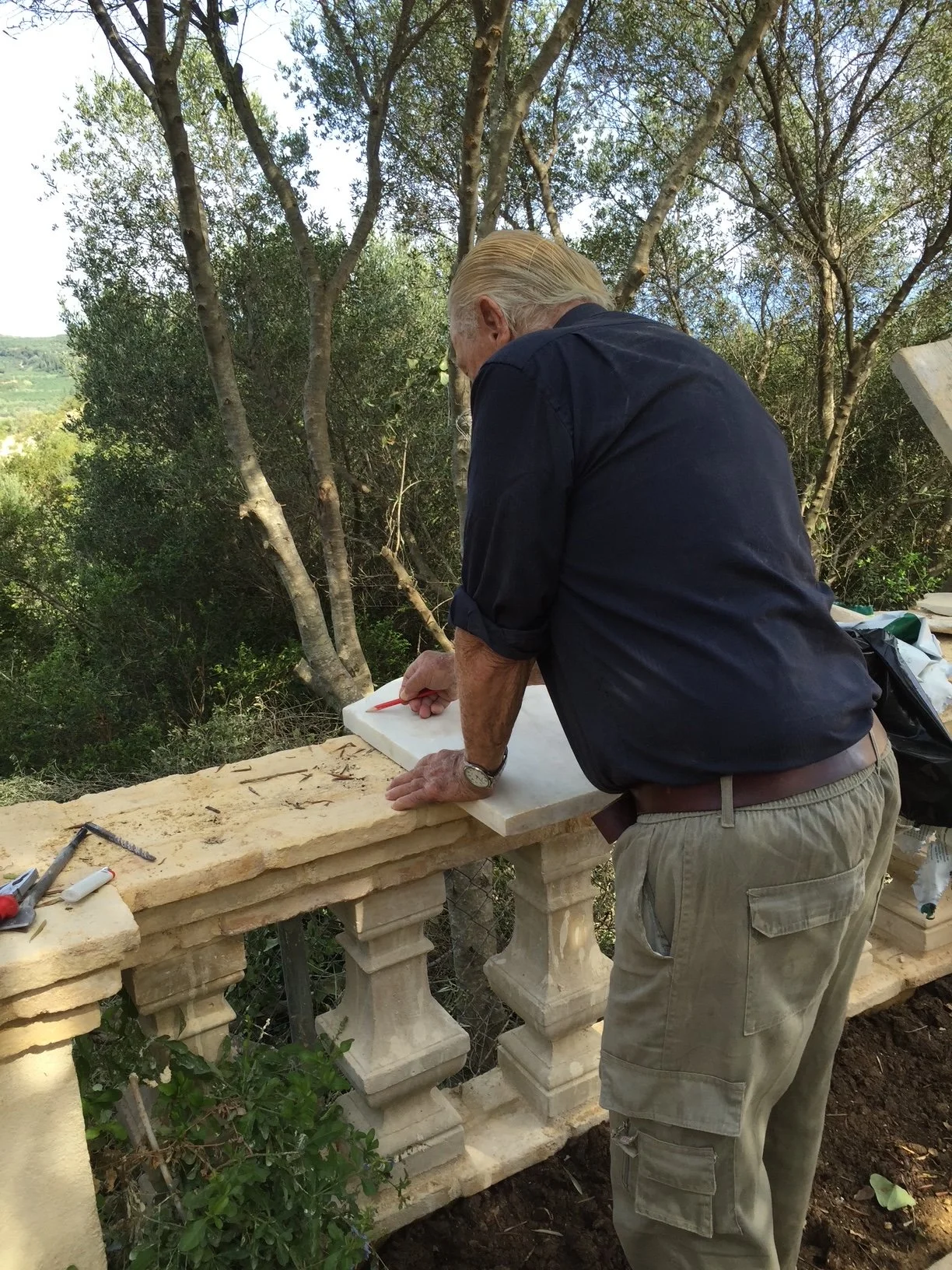
With the funds from his prior house sale, Charles was able to proceed without the delays and financial obstacles of prior construction projects. He was 84 years old when he had his designs complete and building permit in hand. He started construction and finally moved into the completed house when he was 90. During those years, he spent most days at the site overseeing the construction and directing his workmen literally brick by brick and stone by stone to achieve the look for the house and gardens he had envisioned.
One final flourish
c. 2021–2022
The house sits nearly four kilometers from the sea. Charles preferred this remote location, away from the increasing bustle of the coast with its busy beaches and restaurants. He realized that managing the summer heat, at a distance from the sea, would require a swimming pool. And so, at age 95, Charles designed a beautiful pool and pool house to complete the property — his last project.


at rest
Charles died in his bed, with his dogs by his side, at age 98, in 2024.
Charles with his sister, Martha - 1972

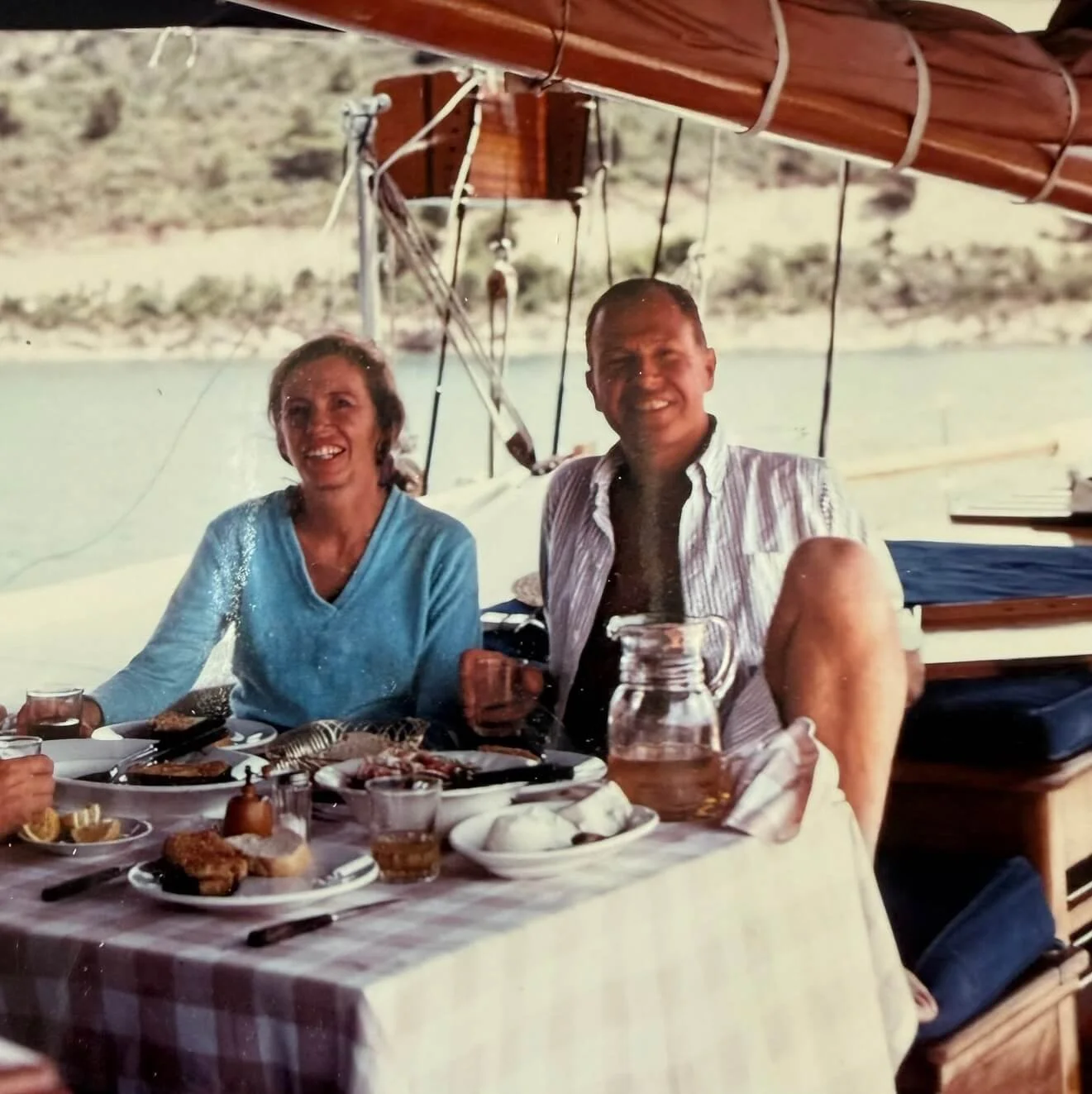
Charles on a friend's yacht - ca. 1962
His legacy continues…
Prior to his death, Charles established a non-profit organization that now owns the house and gardens, with a mandate to support the arts, architecture, and culture in the local area and throughout Greece.